Why Is My Hair Thinning? Common Causes of Hair Loss in Men and Women
What to Know About Shedding, Thinning, and Treatment Options
Hair thinning can feel confusing, frustrating, and deeply personal. For some people, it starts slowly. A little more scalp showing under bright light. A part line that looks wider than before. More hair is collecting in the shower drain. A ponytail that feels thinner than it did a few years ago.
For others, the change feels sudden. One day, your hair looks normal. Then, almost overnight, you start to notice shedding, scalp visibility, or a hairline that no longer looks the way it used to.
One of the most common questions people ask when they begin searching for answers is simple: Why is my hair thinning?
The honest answer is that hair thinning can happen for many reasons. Genetics, hormones, stress, aging, illness, medications, nutritional deficiencies, autoimmune conditions, and lifestyle changes can all play a role. Sometimes there is one clear cause. Other times, several factors overlap.
At SMP Ink CDA, we work with men and women throughout Coeur d’Alene, North Idaho, Spokane, and surrounding areas who are trying to understand what is happening to their hair and what realistic options are available. Some clients are looking for regrowth. Others want a non-surgical way to improve the appearance of thinning hair, visible scalp, or hairline recession.
The most important place to start is understanding what may be causing the thinning in the first place.
Hair Thinning Is More Common Than Most People Realize
Hair loss is one of those topics people rarely talk about openly, even though it affects millions of men and women. Most people do not walk into a clinic because they notice a single hair in the sink that morning. Usually, the concern has been building for months or years.
They have been checking mirrors under harsh lighting. Avoiding certain hairstyles. Wearing hats more often. Feeling uncomfortable in photos. Wondering if others can see their scalp. Trying products that promise thicker hair but do not always deliver the results they hoped for.
Hair thinning is not just cosmetic. It can affect confidence, self-image, dating, social comfort, professional appearance, and quality of life. Many people quietly struggle with it long before they reach out for help.
The good news is that thinning hair does not mean you are out of options. Once you understand the likely cause and the type of hair loss you are experiencing, you can begin looking at realistic solutions.
Common Signs of Thinning Hair
Hair thinning can show up differently depending on the person, the cause, and the pattern of loss.
Common signs include:
- More hair than usual in the shower
- Hair collecting on pillows, clothing, or brushes
- A widening part line
- Increased scalp visibility
- Thinning around the temples
- Recession at the hairline
- Thinning at the crown
- Bald spots or patchy areas
- A ponytail that feels smaller
- Hair that looks flatter or less dense overall
Some people notice shedding first. Others notice visible scalp exposure. Some people do not realize how much their hair has changed until they see a photo from a few years earlier.
If your hair is thinning quickly, falling out in patches, or accompanied by itching, pain, scaling, or irritation, it may be wise to speak with a qualified medical provider or dermatologist. SMP Ink CDA provides cosmetic scalp micropigmentation services, not medical diagnosis or medical hair regrowth treatment.
Common Causes of Hair Loss in Men
For men, one of the most common causes of hair thinning is androgenetic alopecia, often called male pattern baldness. This type of hair loss is largely influenced by genetics and hormones.
Male pattern hair loss often develops gradually and may appear as:
- A receding hairline
- Thinning around the crown
- A bald spot on the top of the scalp
- Diffuse thinning across the top of the head
- Overall loss of density
Some men begin to notice a recession in their early twenties. Others maintain a full head of hair into their forties or fifties before thinning becomes noticeable. The timing can vary, but the emotional impact is often similar.
Many male clients describe feeling exhausted by the constant mental energy required to manage hair loss. They are tired of hats. Tired of checking their reflection. Tired of wondering if people notice their thinning scalp during conversations. Tired of avoiding photos or feeling uncomfortable under bright lighting.
For men who want the appearance of a clean, defined, low-maintenance hairline, SMP for men can create the look of natural hair follicles and a closely shaved style without surgery.
Common Causes of Hair Loss in Women
Hair loss in women is often more emotionally complicated because many women suffer quietly. Female hair thinning is less openly discussed, yet it can significantly impact confidence, identity, and self-image.
Women may notice:
- A widening part line
- Diffuse thinning throughout the scalp
- Loss of density around the temples
- Increased scalp visibility under light
- Thinning near the crown
- More shedding during brushing or washing
The causes of female hair loss can vary significantly. Common contributors may include:
- Hormonal changes
- Genetics
- Thyroid conditions
- Nutritional deficiencies
- Stress
- Pregnancy or postpartum changes
- Menopause
- Medical conditions
- Certain medications
- Autoimmune conditions
For many women, thinning hair is not just about appearance. Hair can be tied closely to femininity, confidence, age, and personal identity. A widening part line or visible scalp can make someone feel like they cannot style their hair the same way anymore.
For women experiencing visible thinning, SMP for women can help reduce scalp contrast and create the appearance of fuller density in thinning areas.
Can Stress Cause Hair Thinning?
Yes, stress can contribute to hair thinning and excessive shedding.
One common form of stress-related hair loss is called telogen effluvium. This can happen when a major physical or emotional stressor disrupts the normal hair growth cycle, pushing more hairs into the shedding phase.
Stress-related hair loss may happen after:
- Divorce
- Illness
- Surgery
- Major life changes
- Rapid weight loss
- Emotional trauma
- Chronic anxiety
- Burnout
- Poor sleep
- Hormonal shifts
One of the most frustrating parts of stress-related hair loss is the delay. Shedding may not appear immediately after the stressful event. It can show up weeks or months later, making it difficult to connect the dots.
Stress-related shedding is not always permanent. In some cases, the hair may partially or fully recover once the body stabilizes. In other situations, stress may accelerate underlying genetic hair loss that was already developing quietly in the background.
That is why it is important to avoid panic and focus on identifying what type of thinning you are experiencing.
Is Hair Thinning Always Permanent?
No. Hair thinning is not always permanent, depending on the cause.
Some types of hair loss are temporary. For example, shedding related to stress, illness, postpartum changes, or rapid weight loss may improve once the underlying trigger is addressed. Other types of hair loss, such as genetic pattern hair loss, may be progressive and require long-term management.
Hair thinning may be temporary, progressive, or a combination of both.
This is why expectations matter. Some people may benefit from medical treatment, topical products, lifestyle changes, or time. Others may be better suited for cosmetic solutions that improve the appearance of thinning rather than trying to regrow hair.
Anyone promising a guaranteed cure for every type of hair loss should be approached carefully. Hair loss is highly individual, and the right solution depends on the cause, pattern, severity, and goals of the person experiencing it.
How Do People Usually Try to Fix Thinning Hair?
By the time many clients start exploring scalp micropigmentation, they have already tried several hair loss solutions.
Common options include:
- Thickening shampoos
- Supplements
- Scalp serums
- Hair fibers
- Hair concealers
- Topical products
- Prescription medications
- Red light therapy
- PRP treatments
- Hair transplants
- Hats or strategic hairstyles
Some options work well for certain people. Others produce minimal or inconsistent results. Some require ongoing use to maintain benefits. Others involve higher cost, more downtime, or more maintenance than a person wants.
This is why the best treatment option depends on what someone is trying to achieve.
If the goal is medical regrowth, a dermatologist or medical provider may be the right place to start. If the goal is to reduce the visible appearance of thinning, improve density, or restore the look of a defined hairline, scalp micropigmentation may be worth considering.
What Is Scalp Micropigmentation?
Scalp micropigmentation, commonly called SMP, is a non-surgical cosmetic procedure that uses specialized pigment to replicate the appearance of natural hair follicles.
Some people casually describe SMP as a “hair tattoo,” but professionally performed SMP is much more detailed and precise than traditional tattooing. Proper SMP requires specialized equipment, pigment selection, scalp-specific technique, density mapping, and hairline design.
SMP does not regrow hair. It does not restart dormant follicles. It does not treat the medical cause of hair loss.
Instead, SMP creates the appearance of:
- A fuller-looking scalp
- Reduced scalp visibility
- More visual density
- A closely shaved hairstyle
- A more defined hairline
- Better balance in thinning areas
- Camouflage for certain scars or patchy areas
When performed correctly, SMP should look natural, subtle, and virtually undetectable in everyday life.
How SMP Helps With Thinning Hair
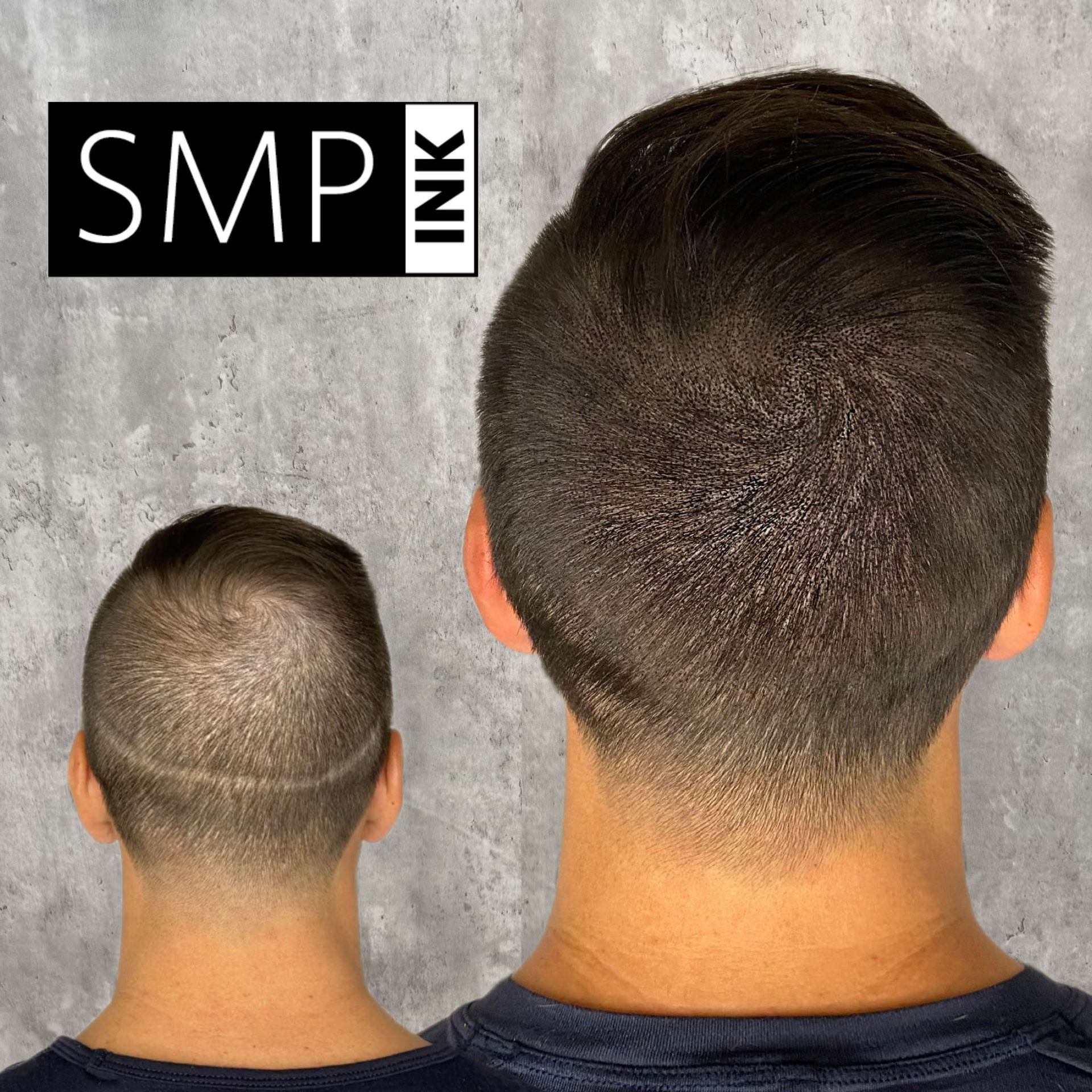
SMP can be helpful for people who still have hair but are bothered by visible scalp exposure. This is often referred to as density work or density fill.
With SMP density fill, tiny pigment impressions are placed between existing hair follicles to reduce the contrast between the scalp and the hair. This can create the appearance of fuller, thicker density without surgery, medications, or daily fibers.
Density fill may be a good option for people who:
- Have thinning hair but still have coverage
- Notice scalp visibility under bright lighting
- Have a widening part line
- Want a fuller-looking appearance
- Are tired of using temporary concealers
- Want a low-maintenance cosmetic solution
For men, SMP can also restore the appearance of a closely shaved scalp by replicating the look of natural follicles. For women, SMP is commonly used to reduce scalp visibility while preserving the look of existing hair.
SMP for Receding Hairlines
A receding hairline can change the way the face is framed. For many men, this is one of the first signs of hair loss they notice.
Hairline restoration with SMP can create the appearance of a more defined, natural-looking hairline. The goal is not to create an artificial or overly sharp result. The goal is to design a hairline that fits the client’s age, face shape, hair pattern, and desired look.
A properly designed SMP hairline should look natural both up close and from a distance.
SMP for Alopecia and Patchy Hair Loss
Alopecia can create patchy, unpredictable, or uneven hair loss. For some clients, the goal is not a dramatic change. It is simple to create a more balanced appearance and reduce the visual contrast between hair and scalp.
Alopecia treatment with SMP may help create the appearance of fuller coverage in areas affected by certain types of hair loss. While SMP does not cure alopecia or stop the medical process behind it, it can improve the cosmetic appearance of visible thinning or patchy areas.
SMP for Scars and Previous Hair Restoration Procedures
Some people come to SMP after a hair transplant or previous procedure. Others have scalp scars from injury, surgery, or older hair restoration techniques.
SMP can sometimes be used to reduce the visibility of certain scars by blending them with the surrounding scalp and hair pattern. For clients who have had previous hair restoration work, SMP may help create a more complete, natural-looking result.
SMP Ink CDA also offers support for clients who are unhappy with previous SMP work through SMP correction and rescue services.
Does SMP Hurt?
This is one of the most common questions people ask before scheduling a consultation.
Most clients describe SMP as very manageable. Some compare it to mild irritation or light scratching. Many are surprised by how comfortable the process feels, and some clients even relax enough to fall asleep during sessions.
Comfort can vary depending on the area being treated, individual sensitivity, and session length, but SMP is generally considered far less invasive than surgical hair restoration.
How Long Does SMP Last?
SMP is designed to be long-lasting, not temporary.
Most clients can expect results to last several years before a touch-up may eventually be recommended. Longevity can vary depending on skin type, lifestyle, sun exposure, aftercare, and how the pigment naturally softens over time.
At SMP Ink CDA, clients receive:
- One-year warranty coverage
- Lifetime client support
- Future touch-up options at reduced pricing
- Ongoing guidance after treatment
This long-term support is important because SMP is not just about the initial result. It is about maintaining a natural appearance over time.
How Much Does SMP Cost?
The cost of SMP depends on the amount of hair loss being treated, the size of the treatment area, and the number of sessions required.
Most clients at SMP Ink CDA invest between $2,000 and $3,500 for a complete treatment series.
Compared to surgical hair restoration, many clients find SMP to be:
- More affordable
- Non-surgical
- Lower maintenance
- More predictable cosmetically
- Less invasive
- Faster to recover from
Financing options are also available through Cherry Financial for clients who prefer flexible payment plans instead of paying everything up front.
Is SMP Right for Every Type of Hair Loss?
SMP is not right for every person or every stage of hair loss.
It may be a strong option for people who want to improve the appearance of thinning hair, scalp visibility, bald spots, receding hairlines, alopecia-related thinning, or certain types of scalp scarring.
However, SMP is not a medical treatment. It does not stop hair loss from progressing, and it does not regrow hair. If someone is experiencing sudden, severe, unexplained, painful, or patchy hair loss, it may be important to seek medical evaluation first.
A professional consultation can help determine whether SMP is appropriate based on your hair loss pattern, expectations, skin type, existing hair, and long-term goals.
You can also review the SMP FAQs to learn more about the process, results, aftercare, and what to expect.
Moving Forward With Realistic Hair Loss Solutions
Hair thinning can feel discouraging, but it is also incredibly common. Men and women of all ages experience changes in density, hairline shape, scalp visibility, and overall fullness.
For some people, the goal is regrowth. For others, the goal is to stop worrying about their hair every day and feel confident again in normal life.
The right answer depends on the cause of the thinning and what you want your outcome to be.
At SMP Ink CDA, our goal is not to sell false hope or miracle cures. Our goal is to provide honest education, realistic expectations, and natural-looking scalp micropigmentation for clients throughout Coeur d’Alene, North Idaho, Spokane, and the surrounding region.
Whether your hair thinning is caused by genetics, stress, hormonal changes, alopecia, aging, or another factor, you do not have to keep feeling consumed by it every day.
To learn more about whether SMP may be a good fit for your hair loss concerns, contact SMP Ink CDA to schedule a consultation.
Frequently Asked Questions About SMP Treatment for Alopecia
Why is my hair thinning all of a sudden?
Sudden hair thinning may be related to stress, illness, hormonal changes, medication, rapid weight loss, nutritional deficiencies, or another underlying factor. If thinning appears quickly or severely, it may be worth speaking with a medical provider or dermatologist.
What is the most common cause of hair thinning?
One of the most common causes is hereditary pattern hair loss, also called androgenetic alopecia. In men, this often appears as a receding hairline or thinning crown. In women, it often appears as diffuse thinning or a widening part line.
Can stress cause thinning hair?
Yes. Significant physical or emotional stress can contribute to shedding, often through a condition called telogen effluvium. This type of shedding may appear weeks or months after the stressful event.
Can thinning hair grow back?
Sometimes. Hair may regrow if the cause is temporary and the follicles remain healthy. However, genetic thinning or certain medical causes may not fully reverse without treatment or management.
Does scalp micropigmentation regrow hair?
No. SMP does not regrow hair. It is a cosmetic procedure that creates the appearance of natural hair follicles, fuller density, or a closely shaved scalp.
Is SMP good for thinning hair?
SMP can be a strong option for people who want to reduce visible scalp contrast, create the appearance of fuller density, or restore the look of a defined hairline without surgery.
How much does SMP cost?
Cost depends on the size and complexity of the treatment area. Most SMP Ink CDA clients invest between $2,000 and $3,500 for a complete treatment series.
How long does SMP last?
SMP is designed to last several years. Touch-ups may eventually be recommended depending on skin type, lifestyle, sun exposure, and natural fading over time.