Scalp Micropigmentation for Alopecia in Idaho and Montana
What Is Alopecia?
Alopecia is a medical condition that affects individuals of all ages, genders, and backgrounds. For many people throughout Coeur d’Alene, Spokane, Missoula, Kalispell, Bozeman, Helena, and surrounding areas, hair loss caused by alopecia presents unique emotional and practical challenges.
Unlike typical male or female pattern baldness, alopecia often develops unexpectedly and unpredictably, sometimes causing patchy hair loss and in other cases leading to complete loss of scalp or body hair. The sudden nature of this condition can create uncertainty for individuals trying to maintain a consistent appearance.
For residents across North Idaho, Eastern Washington, Western Montana, and even Western Canada, scalp micropigmentation (SMP) has become an increasingly trusted option for addressing alopecia-related hair loss.
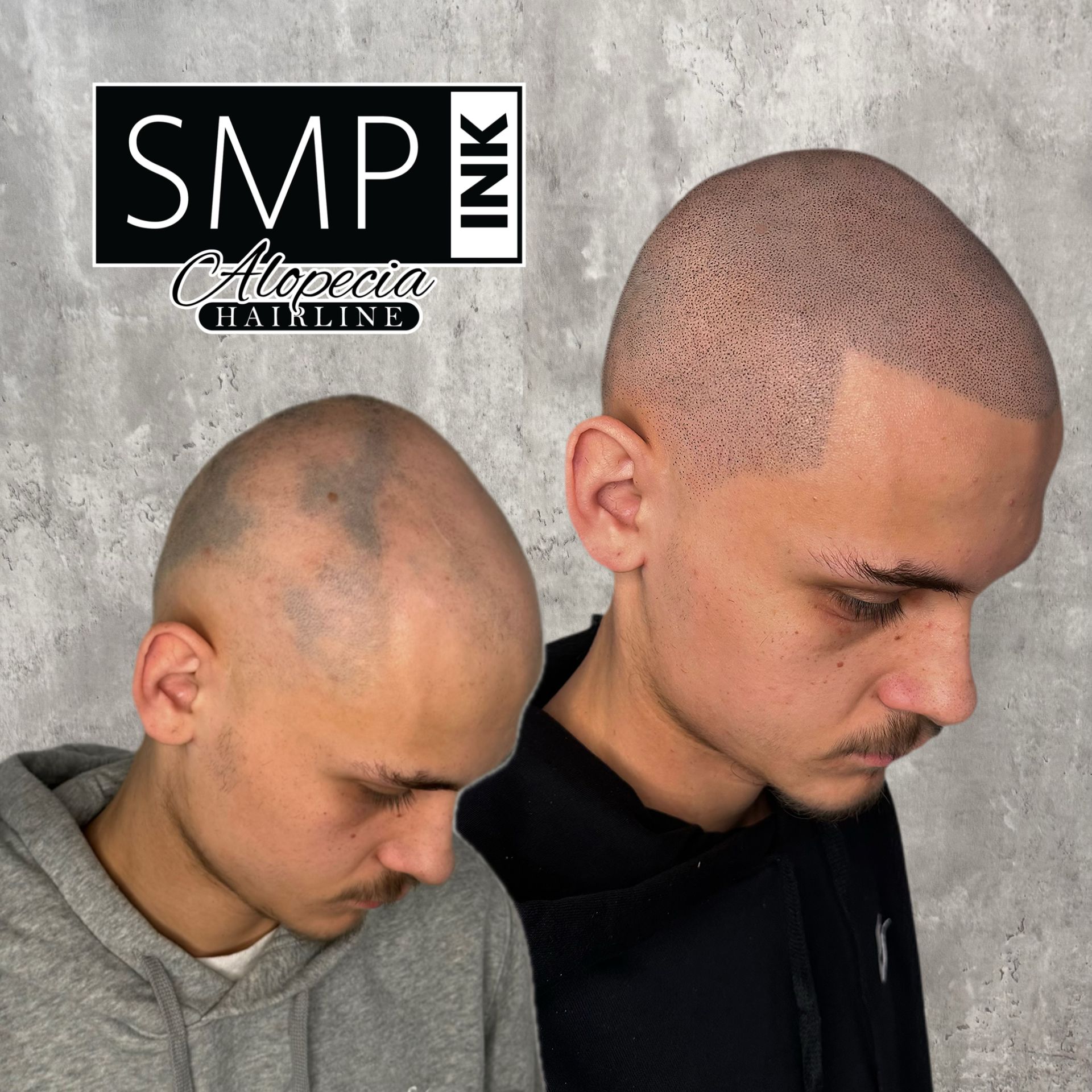
Scalp micropigmentation offers a non-surgical, medically informed cosmetic solution that restores the appearance of natural hair follicles. By replicating the look of closely shaved hair, SMP creates visual consistency across the scalp and allows individuals living with alopecia to regain confidence in their appearance.
This guide explains how scalp micropigmentation works for alopecia and why individuals throughout Coeur d’Alene, Post Falls, Spokane, Missoula, Kalispell, and the greater Inland Northwest are turning to SMP as a long-term cosmetic solution.
Understanding Alopecia Types
Alopecia is not a single condition but rather a group of disorders that interrupt normal hair follicle activity. In many cases, alopecia is linked to autoimmune responses, where the body mistakenly attacks its own hair follicles.
The severity and pattern of hair loss varies widely depending on the specific type of alopecia.
Alopecia Areata
Alopecia Areata is one of the most common forms of alopecia and typically appears as round or irregular patches of hair loss on the scalp.
These patches may appear suddenly and sometimes resolve on their own before returning again. Many individuals in Coeur d’Alene, Spokane, and surrounding communities first notice alopecia areata when small patches begin forming on the scalp or beard area.
Because the pattern of hair loss can shift over time, maintaining a consistent appearance may become difficult. This is where scalp micropigmentation can help restore visual balance.
Alopecia Totalis
Alopecia Totalis is a more advanced form of the condition and results in complete loss of hair across the entire scalp.
Individuals experiencing this type of alopecia often explore wigs, cosmetic fibers, or medications before discovering scalp micropigmentation as a stable alternative.
SMP can recreate the appearance of a cleanly shaved hairstyle, allowing clients to maintain a natural and consistent look regardless of hair regrowth patterns.
Alopecia Universalis
Alopecia Universalis represents the most extensive form of alopecia and results in complete hair loss across the entire body, including eyebrows, eyelashes, and facial hair.
While this form of alopecia is less common, individuals living with it often seek solutions that restore normalcy and confidence in daily life.
Scalp micropigmentation can provide a realistic scalp appearance even when no natural hair follicles remain active.
Why SMP Works for Alopecia
Scalp micropigmentation is uniquely suited for individuals with alopecia because it does not rely on hair regrowth.
Traditional hair restoration solutions often depend on active follicles or ongoing medication. With alopecia, however, follicle activity may be inconsistent or completely inactive.
SMP works differently.
Using specialized pigments and precise micro-needling techniques, practitioners replicate the appearance of tiny hair follicles directly within the scalp tissue. The result is a natural-looking shaved hairstyle that blends with remaining hair or stands alone in cases of full hair loss.
Two key factors make SMP especially effective for alopecia clients.
Uniform Follicle Replication
SMP carefully replicates the natural spacing and density of hair follicles.
Rather than creating artificial patterns, the treatment uses layered pigmentation and organic placement to mimic how hair naturally grows across the scalp. This technique creates the illusion of fullness while maintaining a subtle and realistic appearance.
No Reliance on Hair Regrowth
For individuals with alopecia, hair regrowth may come and go over time. Because SMP does not depend on follicle activity, results remain visually consistent regardless of flare-ups or remission cycles.
This stability is one of the primary reasons people across North Idaho, Eastern Washington, and Western Montana seek scalp micropigmentation when managing alopecia.
Realistic Expectations with Scalp Micropigmentation
Like any cosmetic treatment, scalp micropigmentation works best when expectations are aligned with realistic outcomes.
SMP does not restore hair growth. Instead, it creates the appearance of closely shaved hair follicles, which visually restores density and balance across the scalp.
Several technical elements influence the realism of the final result.
Blend
The pigment must blend seamlessly with the client's natural skin tone and any remaining hair.
For individuals with patchy alopecia, SMP helps blend affected areas into surrounding hair, eliminating visible contrast.
Consistency
Achieving a natural appearance requires consistent follicle placement, spacing, and density throughout the treatment area.
Precision is critical to avoid patterns that look artificial or overly dense.
Tone Matching
Pigment color must be carefully selected to match the client's natural hair tone and skin undertone.
This ensures the final result looks natural both indoors and in direct sunlight, which is particularly important for individuals who live active lifestyles across Idaho and Montana’s outdoor environments.
Serving Idaho, Montana, and Western Canada
Individuals seeking scalp micropigmentation for alopecia often travel from across the Inland Northwest to receive treatment.
Our clinic proudly serves clients throughout:
- Coeur d’Alene, Idaho
- Post Falls, Idaho
- Hayden and Rathdrum, Idaho
- Sandpoint and Bonners Ferry, Idaho
- Spokane and Spokane Valley, Washington
- Missoula, Montana
- Kalispell, Montana
- Bozeman, Montana
- Helena, Montana
Because scalp micropigmentation is a highly specialized treatment, many clients travel from across Western Canada as well, including Vancouver, Calgary, and Edmonton.
The Inland Northwest has become a regional hub for individuals seeking natural, medically responsible SMP treatments, and many clients prefer working with experienced practitioners who understand both the technical and emotional aspects of alopecia.
The Treatment Process for Alopecia Clients
Most scalp micropigmentation treatments for alopecia are completed over three to four sessions, spaced approximately one week apart.
This phased approach allows practitioners to build pigment gradually while carefully monitoring skin response and tone accuracy.
During treatment, specialized equipment deposits pigment into the upper layers of the scalp to simulate follicle impressions. Each session adds subtle density, creating a layered and natural result.
The process typically includes:
- Private consultation and scalp evaluation
- Hairline and density design
- Gradual pigment layering
- Tone refinement and blending
This method ensures results remain natural, age-appropriate, and adaptable if alopecia patterns evolve in the future.
Long-Term Results and Maintenance
One of the most appealing aspects of scalp micropigmentation is its durability.
Most clients experience a consistent appearance for four to six years before any minor touch-ups are needed.
Because SMP is a cosmetic pigmentation treatment rather than a surgical procedure, recovery time is minimal, and daily activities can typically resume shortly after each session.
For individuals managing alopecia, this means they can maintain a stable appearance without relying on daily concealers, fibers, or wigs.
Schedule a Private Consultation
If you are experiencing alopecia in Coeur d’Alene, Spokane, Missoula, or anywhere across Idaho, Montana, and the Inland Northwest, scalp micropigmentation may provide a reliable cosmetic solution.
A private consultation allows us to evaluate your scalp condition, discuss treatment options, and design a personalized plan tailored to your goals.
Our team focuses on natural results, ethical treatment planning, and long-term client satisfaction.
Frequently Asked Questions About SMP Treatment for Alopecia
Can scalp micropigmentation be performed during active alopecia flare-ups?
Treatment timing depends on scalp condition and disease stability. A consultation helps determine whether the scalp is ready for treatment.
Will SMP interfere with medical treatments for alopecia?
No. Scalp micropigmentation is a cosmetic procedure and does not affect hair follicles or interfere with dermatological treatments.
Is SMP effective for complete hair loss?
Yes. SMP is particularly effective for individuals with complete scalp hair loss because it recreates the appearance of closely shaved follicles.
Can results be adjusted later?
Yes. SMP can be refined, darkened, or refreshed over time to maintain a natural appearance.
How many sessions are typically required?
Most alopecia clients complete treatment in three to four sessions, depending on scalp condition and coverage area.